
Populists, Technology, & Organization

“The underlying social reality is one not generally kept firmly in mind as an operative dynamic of modern society – namely, mass democratic movements are overarchingly difficult for human beings to generate. ...coordinated insurgent actions by hundreds of thousands or millions of people represent a political, an organizational, and above all, a cultural achievement of the first magnitude.” – Lawrence Goodwyn, The Populist Moment*
Funny about populism becoming a derogatory term wielded by established power against any sort of perceived threat. Just twenty-five years ago, the term had basically disappeared from our political lexicon. It was resurrected by none other than Alan Greenspan – may he rot in hell. Near the end of his Fed reign, Greenspan gave a couple warnings on "populist" resurgence. He left out this resurgence would develop in direct response to his more than successful twenty year campaign to concentrate wealth in America. Though one thing about the old Randian fool, Ayn not Paul, in comparison to the denigrators of populism who followed his lead, he at least understood something about the historical Populists.
America’s Populists were one of the great small “d” democratic movements of the republic’s history, and thus world history. Most know little about the Populist Movement, maybe just it had something to do with money. Certainly, the "money question" was a big concern, but the most important Populist issue was technology. New technologies and technic, specifically the railroads, telegraph, and Eastern banks, were taking distributed economic and political power, that is democracy, directly out of the citizenry's hands and concentrating it into a handful of corporations, that great undemocratic political and social force of industrialism.
The money question – what exactly is money and how does a money system work – was an essential problem for small farmers, still the majority of the economy, and the newly growing industrial workforce, but it was only one. Maybe the greatest thing that can be said about the Populists is a bunch of dirt farmers came up with completely valid critiques of the developing money system and offered totally viable alternatives. A century after the founding of the agrarian republic, the Populists demonstrated its democratic viability. Over time, their lessons were gradually lost to history, buried I suppose is more accurate. Remembered at all, it is wrongly through the comic stylings of presidential candidate William Jennings Bryan and crucifixions on crosses of gold.
I recently reread the People’s party, 1892, Omaha Platform. One thing that stuck-out, their definition of the then developing money system, “The national power to create money is appropriated to enrich bond-holders.” This was the initial shaping of the money system we have today. The Populists offered an alternative, the Farmers Alliance Sub-Treasury system, distributed democratic organization in opposition to the developing, centrally controlled money system. They proposed a money system based not on enriching bondholders, but the farmers' crops. Twenty years later, with the founding of the Federal Reserve System, the architecture of the Sub-Treasury system was borrowed and bastardized, stripped of the Alliance’s democratic content and process.
The biggest thing I noted upon rereading the platform, the railroads came before the money question. “We believe that the time has come when the railroad corporations will either own the people or the people must own the railroads.” If you look at the railroad corporations representing burgeoning industrial corporate power, then here in the 21st century we are all owned.
Just as importantly, the Peoples Platform states if the government should run the railroads, “we should favor an amendment to the Constitution by which all persons engaged in the government service shall be placed under a civil-service regulation of the most rigid character, so as to prevent the increase of the power of the national administration by the use of such additional government employes.”
That ain’t European socialism, it's 19th century red, white, and blue American republicanism, a democratic distrust of concentrated power. Centralized power is inherently unaccountable – Democracy 101: To keep power accountable it needs to be distributed. For a hundred-fifty years since, the federal government and the corporations got bigger and bigger, power became more centralized, more unaccountable.
In his sublime democratic history of the Populist Movement and specifically the Farmers Alliance from which it was birthed, Lawrence Goodwyn writes in Democratic Promise: The Populist Moment in America (1976),
“Like most nineteenth-century Americans, farmers were enthusiastic about the arrival of each new railroad that promised to further ‘open up the country’ to new towns and new markets. But the farmers’ euphoria at the appearance of a new rail line inevitably turned to bitter resentment. Alliance leaders learned the rationalizations of the railroads for their ‘discriminatory freight rates’ while their rural members complained less elegantly of simply being ‘robbed’ and ‘gypped.’”
The Populists weren’t against technology, they wanted to make it work for them. Unlike today, where new technologies roll across a society with the majority politically and economically disenfranchised, the small farm citizenry of the Populist era still retained both. The Populists fought to keep alive the very real political and economic power they had. Any such popular movement today would need to begin with a democratic resurrection.
The railroads weren’t the only technology the Populists found themselves wrestling, another was the telegraph. While the railroads defined industrial technologies, the telegraph was the first electromagnetic technology. The Omaha Platform states, “The telegraph and telephone, like the post office system, being a necessity for the transmission of news, should be owned and operated by the government in the interest of the people.” Again, the Populists had a much different understanding of and experience with what government was at the end of the 19th century then we do well into the 21st. We face both the newest generation of electromagnetic technologies and now compute networks of quantum technologies making our government structures completely archaic.
The new technologies of the late 19th century placed the local farm, the local economy, and local government at the mercy of new national and global forces. The seed, the hoe, the plow, the harvester, and other implements were no longer local, but brought in by the railroads, backed by a money system controlled by East Coast national banks, all valued by growing global corporate markets tied together by the telegraph and phones. The farmer had little or no say.
This led to the Populists understanding, funnily enough, what today’s Americans aren’t quite clear on, the politics of the past and present were insufficient to meeting the changes wrought by the technologies of the day. Goodwyn writes,
“James Murdock of the Progressive Farmer also located the cause of widespread hardship in the political backwardness of the nation’s leaders and party system. ‘We are in the era of steam, railroad, telegraph and mammoth machinery. The financial system that answered to the age of the slow coach, sickle and spinning wheel will not respond to this. We have had a revolution in manufactures and transportation, and we must have a radical change in our financial system.’”
With today’s technologies, our politics are hopelessly backward. The Farmers Alliance sought to politically and economically organize, to create distributed power structures in the new markets that eventually crushed them. Incredibly today, there’s an insistence what was backward politics a century ago can miraculously provide solutions to the present challenges of technology, even when they already failed in the past.
At the end of the 19th century, armed with real democratic experience, dirt-farmers understood in order to preserve, reform and evolve democracy in response to new technologies, the need for new structures and new processes weren’t just necessary but imperative. In 1933, the beautiful democrat Simone Weil completely understood writing,
"To this end, the first thing is to know in what technical progress consists, what factors play a part in it, and to examine each factor separately; for we mix up under the name of technical progress entirely different procedures that offer different possibilities of development.”
“Such a study would be forced to take into account the economic and social relations which necessarily go hand in hand with a given form of technical achievement."
Ninety years later, I couldn’t put it better or more succinctly myself. Call it the politics of technology.
# # #
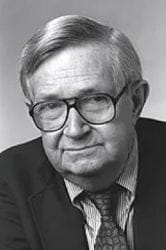
*I put Larry’s pix above to let you kids know you can learn something from old, white men with gray hair, not from many, but a few. On Larry’s comment at the top, democratic movements are uncommon not just because they’re difficult to piece together, but because across recorded history democracy is an anomaly. After all, before the birth of modern republicanism in 1776, it’d been almost two thousands years with not much democratic experience. Previously, there had been the Romans and before them the Greeks, who started it all.
I long thought the American people would step up and stop the rot. Yet today, most don’t even know what’s been lost. All that floods my political senses today is thinking about 47 years ago walking into the Draft Teddy Kennedy for President HQ on the east side of Richard J. Daley Plaza. I spent the next 8 months working against the incumbent president of my party. He was a very unpopular guy. The three main issues that brought him down were oil, inflation, and...wait for it...Iran. How about that.