
Numbers & SPCX

“This future man, whom the scientists tell us they will produce in no more than a hundred years, seems to be possessed by a rebellion against human existence as it has been given, a free gift from nowhere (secularly speaking), which he wishes to exchange, as it were, for something he has made himself. There is no reason to doubt our abilities to accomplish such an exchange, just as there is no reason to doubt our present ability to destroy all organic life on earth. The question is only whether we wish to use our new scientific and technical knowledge in this direction, and this question cannot be decided by scientific means; it is a political question of the first order and therefore can hardly be left to the decision of professional scientists or professional politicians.” – Hannah Arendt, The Human Condition, 1958
I went back and reread the prologue of Arendt’s The Human Condition (I put the entire short prologue below). She points to two events framing the book. The first was the recent launching of the Soviet Sputnik satellite, the initial small step of humanity off the planet. The second is the developing age of automation, brought about by the burgeoning compute industry. The questions concerning how to apply these technologies, she insisted, should not be left to scientists alone or, she would most readily agree, to today's billionaire technologists. In regards to professional politicians, both the archaic institutions they inhabit and processes utilized, along with the complete dysfunction of anything claiming to be politics today, makes them largely irrelevant in regards to the challenges of today's technological development and implementation.
Arendt continues with what might be the most serious concern in regards to present technological development, our inability “to understand, that is, to think and speak about the things which nevertheless we are able to do.” This problem is embedded in modern science, most especially in Arendt's view, quantum physics, which underlies much of our present technological development. We greatly misconstrue that in developing these technologies, in the doing, for example creating nuclear weapons or the transistor, that we also understand.
The physicist Richard Feynman was fond of saying, “No one understands quantum mechanics.” This is true today as when he said it sixty years ago. There is also a misconception that our inability to convey quantum mechanics concepts with words is the problem, but if you know the math, you can fully understand. This simply isn't true, no one would say Feynman didn’t know the math.
Our inability to understand begins with the math itself, first and foremost the use and manipulation of numbers of a size far beyond the grasp of any human mind. As an example, let’s use one extremely important number for quantum physics, Planck’s constant. At the end of the 19th century, Max Planck discovered/conceived of light as a particle, a discrete packet that could be measured via his constant. The value of this constant is 6.626 x 10^{-34}, for the human mind, a completely inconceivable number. At the same time, Planck's number is invaluable for any contemporary conception of how the universe operates.
Planck’s constant is fundamental to quantum operations from Einstein’s photoelectric effect to Heisenberg’s quantum mechanics. It is part of Heisenberg’s “uncertainty principle,” basically, the better we measure one aspect of a quantum particle, such as position, the less we can know of another aspect such as its momentum. Heisenberg’s equation looks like this:
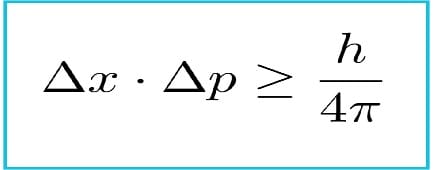
Delta x equals "uncertainty" in position, delta p, uncertainty in momentum. H is Planck’s constant and of course all will notice from grammar school geometry, pi, one of humanity’s oldest inconceivable mathematical constants. Though such numbers are beyond our conception, they can be amazingly powerful math tools used to both describe and manipulate physical reality, yet abilities in ways we don't really understand.
Arendt writes, “If it should turn out to be true that knowledge (in the modern sense of know-how) and thought have parted company for good, then we would indeed become the helpless slaves, not so much of our machines as of our know-how, thoughtless creatures at the mercy of every gadget which is technically possible, no matter how murderous it is.” Without some reflection, our limited understanding places ultimate power not with us, but the gadget.
Just as we do not, nor can we, truly understand such numbers h and pi, compute, which understands nothing, can manipulate these same numbers rapidly at an inconceivable scale, helping create ever more powerful technologies. If you want to equate math capability with intelligence, compute out matched us long before Nvidia chips.
After setting the contemporary scene in the short prologue, The Human Condition provides a two and half thousand year profile and analysis of Western politics and political thinking. Arendt concludes, “What I propose, therefore, is very simple: it is nothing more than to think what we are doing. 'What we are doing' is indeed the central theme of this book.” Here lies the great contradiction of this burgeoning age of artificial intelligence, it is bereft of real intelligence.
Speaking of numbers and artificial intelligence, let’s look at our era’s own PT Barnum's latest circus. Seventy years ago, Arendt wrote of Sputnik and automation as the beginnings of a new human era. Today, Elon shills space and compute fantasies for financial markets who in return provide fantastical real numbers. The launch of Elon’s space company was backed by seemingly all Wall Street's banks and nonbanks. In regards to numbers, the float, the stock made available to the little peoples, was only 4% of the company, five hundred million share, talk about your unreal numbers. In the first day, over half were traded, providing fantastical value for a company that lost $15 billion last year. Immediately, Elon used part of his new cache of loot to purchase some AI software. Despite years ago having launched his car company talking about AI, he’s behind, though what’s behind and what's ahead remains greatly debatable. What we do know, today, the only thought about technology, such that can be called thought, is exclusively monetary.
Finally, the Cup continues. Yesterday was Africa day. Ghana won in the 95th minute and Congo tied the Portuguese. Boy, if Portugal wants to keep putting Ronaldo on the pitch, they ought to stuff him and stick him midfield. However, it was great to see the Congolese tie it right before the half and then hold on. After all, last time they made the Cup in 1974, America’s gift to the Congo, Mobutu Sese Seko was beginning the second decade of his three and half decade kleptocracy. It brought to mind another sporting event that happened that year in then Zaire – When We Were Kings.
###
The Human Condition, Prologue
In 1957, an earth-born object made by man was launched into the universe, where for some weeks it circled the earth according to the same laws of gravitation that swing and keep in motion the celestial bodies—the sun, the moon, and the stars. To be sure, the man-made satellite was no moon or star, no heavenly body which could follow its circling path for a time span that to us mortals, bound by earthly time, lasts from eternity to eternity. Yet, for a time it managed to stay in the skies; it dwelt and moved in the proximity of the heavenly bodies as though it had been admitted tentatively to their sublime company.
This event, second in importance to no other, not even to the splitting of the atom, would have been greeted with unmitigated joy if it had not been for the uncomfortable military and political circumstances attending it. But, curiously enough, this joy was not triumphal; it was not pride or awe at the tremendousness of human power and mastery which thrilled the hearts of men, who now, when they looked up from the earth toward the skies, could behold there a thing of their own making. The immediate reaction, expressed on the spur of the moment, was relief about the first "step toward escape from men's imprisonment to the earth." And this strange statement, far from being the accidental slip of some American reporter, unwittingly echoed the extraordinary line which, more than twenty years ago, had been carved on the funeral obelisk for one of Russia's great scientists: "Mankind will not remain bound to the earth forever."
Such feelings have been commonplace for some time. They show that men everywhere are by no means slow to catch up and adjust to scientific discoveries and technical developments, but that, on the contrary, they have out sped them by decades. Here, as in other respects, science has realized and affirmed what men anticipated in dreams that were neither wild nor idle. What is new is only that one of this country's most respectable newspapers finally brought to its front page what up to then had been buried in the highly non-respectable literature of science fiction (to which, unfortunately, nobody yet has paid the attention it deserves as a vehicle of mass sentiments and mass desires). The banality of the statement should not make us overlook how extraordinary in fact it was; for although Christians have spoken of the earth as a vale of tears and philosophers have looked upon their body as a prison of mind or soul, nobody in the history of mankind has ever conceived of the earth as a prison for men's bodies or shown such eagerness to go literally from here to the moon. Should the emancipation and secularization of the modern age, which began with a turning-away, not necessarily from God, but from a god who was the Father of men in heaven, end with an even more fateful repudiation of an Earth who was the Mother of all living creatures under the sky?
The earth is the very quintessence of the human condition, and earthly nature, for all we know, may be unique in the universe in providing human beings with a habitat in which they can move and breathe without effort and without artifice. The human artifice of the world separates human existence from all mere animal environment, but life itself is outside this artificial world, and through life man remains related to all other living organisms. For some time now, a great many scientific endeavors have been directed toward making life also "artificial," toward cutting the last tie through which even man belongs among the children of nature.
It is the same desire to escape from imprisonment to the earth that is manifest in the attempt to create life in the test tube, in the desire to mix "frozen germ plasma from people of demonstrated ability under the microscope to produce superior human beings" and "to alter [their] size, shape and function"; and the wish to escape the human condition, I suspect, also underlies the hope to extend man's life-span far beyond the hundred-year limit. This future man, whom the scientists tell us they will produce in no more than a hundred years, seems to be possessed by a rebellion against human existence as it has been given, a free gift from nowhere (secularly speaking), which he wishes to exchange, as it were, for something he has made himself. There is no reason to doubt our abilities to accomplish such an exchange, just as there is no reason to doubt our present ability to destroy all organic life on earth. The question is only whether we wish to use our new scientific and technical knowledge in this direction, and this question cannot be decided by scientific means; it is a political question of the first order and therefore can hardly be left to the decision of professional scientists or professional politicians.
While such possibilities still may lie in a distant future, the first boomerang effects of science's great triumphs have made themselves felt in a crisis within the natural sciences themselves. The trouble concerns the fact that the "truths" of the modern scientific world view, though they can be demonstrated in mathematical formulas and proved technologically, will no longer lend themselves to normal expression in speech and thought. The moment these "truths" are spoken of conceptually and coherently, the resulting statements will be "not perhaps as meaningless as a 'triangular circle,' but much more so than a 'winged lion' " (Erwin Schrodinger). We do not yet know whether this situation is final. But it could be that we, who are earth-bound creatures and have begun to act as though we were dwellers of the universe, will forever be unable to understand, that is, to think and speak about the things which nevertheless we are able to do. In this case, it would be as though our brain, which constitutes the physical, material condition of our thoughts, were unable to follow what we do, so that from now on we would indeed need artificial machines to do our thinking and speaking. If it should turn out to be true that knowledge (in the modern sense of know-how) and thought have parted company for good, then we would indeed become the helpless slaves, not so much of our machines as of our know-how, thoughtless creatures at the mercy of every gadget which is technically possible, no matter how murderous it is.
However, even apart from these last and yet uncertain consequences, the situation created by the sciences is of great political significance. Wherever the relevance of speech is at stake, matters become political by definition, for speech is what makes man a political being. If we would follow the advice, so frequently urged upon us, to adjust our cultural attitudes to the present status of scientific achievement, we would in all earnest adopt a way of life in which speech is no longer meaningful. For the sciences today have been forced to adopt a "language" of mathematical symbols which, though it was originally meant only as an abbreviation for spoken statements, now contains statements that in no way can be translated back into speech. The reason why it may be wise to distrust the political judgment of scientists qua scientists is not primarily their lack of "character"—that they did not refuse to develop atomic weapons—or their naivete—that they did not understand that once these weapons were developed they would be the last to be consulted about their use-—but precisely the fact that they move in a world where speech has lost its power. And whatever men do or know or experience can make sense only to the extent that it can be spoken about. There may be truths beyond speech, and they may be of great relevance to man in the singular, that is, to man in so far as he is not a political being, whatever else he may be. Men in the plural, that is, men in so far as they live and move and act in this world, can experience meaningfulness only because they can talk with and make sense to each other and to themselves.
Closer at hand and perhaps equally decisive is another no less threatening event. This is the advent of automation, which in a few decades probably will empty the factories and liberate mankind from its oldest and most natural burden, the burden of laboring and the bondage to necessity. Here, too, a fundamental aspect of the human condition is at stake, but the rebellion against it, the wish to be liberated from labor's "toil and trouble," is not modern but as old as recorded history. Freedom from labor itself is not new; it once belonged among the most firmly established privileges of the few. In this instance, it seems as though scientific progress and technical developments had been only taken advantage of to achieve something about which all former ages dreamed but which none had been able to realize.
However, this is so only in appearance. The modern age has carried with it a theoretical glorification of labor and has resulted in a factual transformation of the whole of society into a laboring society. The fulfilment of the wish, therefore, like the fulfilment of wishes in fairy tales, comes at a moment when it can only be self-defeating. It is a society of laborers which is about to be liberated from the fetters of labor, and this society does no longer know of those other higher and more meaningful activities for the sake of which this freedom would deserve to be won. Within this society, which is egalitarian because this is labor's way of making men live together, there is no class left, no aristocracy of either a political or spiritual nature from which a restoration of the other capacities of man could start anew. Even presidents, kings, and prime ministers think of their offices in terms of a job necessary for the life of society, and among the intellectuals, only solitary individuals are left who consider what they are doing in terms of work and not in terms of making a living. What we are confronted with is the prospect of a society of laborers without labor, that is, without the only activity left to them. Surely, nothing could be worse.
To these preoccupations and perplexities, this book does not offer an answer. Such answers are given every day, and they are matters of practical politics, subject to the agreement of many; they can never lie in theoretical considerations or the opinion of one person, as though we dealt here with problems for which only one solution is possible. What I propose in the following is a reconsideration of the human condition from the vantage point of our newest experiences and our most recent fears. This, obviously, is a matter of thought, and thoughtlessness—the heedless recklessness or hopeless confusion or complacent repetition of "truths" which have become trivial and empty—seems to me among the outstanding characteristics of our time. What I propose, therefore, is very simple: it is nothing more than to think what we are doing. "What we are doing" is indeed the central theme of this book. It deals only with the most elementary articulations of the human condition, with those activities that traditionally, as well as according to current opinion, are within the range of every human being. For this and other reasons, the highest and perhaps purest activity of which men are capable, the activity of thinking, is left out of these present considerations. Systematically, therefore, the book is limited to a discussion of labor, work, and action, which forms its three central chapters. Historically, I deal in a last chapter with the modern age, and throughout the book with the various constellations within the hierarchy of activities as we know them from Western history.
However, the modern age is not the same as the modern world. Scientifically, the modern age which began in the seventeenth century came to an end at the beginning of the twentieth century; politically, the modern world, in which we live today, was born with the first atomic explosions. I do not discuss this modern world, against whose background this book was written. I confine myself, on the one hand, to an analysis of those general human capacities which grow out of the human condition and are permanent, that is, which cannot be irretrievably lost so long as the human condition itself is not changed. The purpose of the historical analysis, on the other hand, is to trace back modern world alienation, its twofold flight from the earth into the universe and from the world into the self, to its origins, in order to arrive at an understanding of the nature of society as it had developed and presented itself at the very moment when it was overcome by the advent of a new and yet unknown age.